

I work with both wheat reed and water reed. Traditional wheat reed varieties include Maris Widgeon, Red Standard, Victor, Square head Master, huntsmen and No.59. I also use Triticale which is a mixture between Wheat and Rye. Wheat reed is the traditional material used on a Dorset roof. The reed is fixed down using hazel spars, liggers and straw bonds then trimmed down using a shearing hook.
Water Reed

Water reed has thicker walls than wheat straw, which makes it a much harder material and will look coarser on a roof. Most water reed is imported from overseas countries such as Turkey, Austria, Poland and Hungary.
Growing and Harvesting Thatching Straw
I love growing and harvesting my own thatching straw using traditional methods and machinery in West Dorset. Here you can see some of the straw I’ve grown and a video of it being cut with one of my binders.
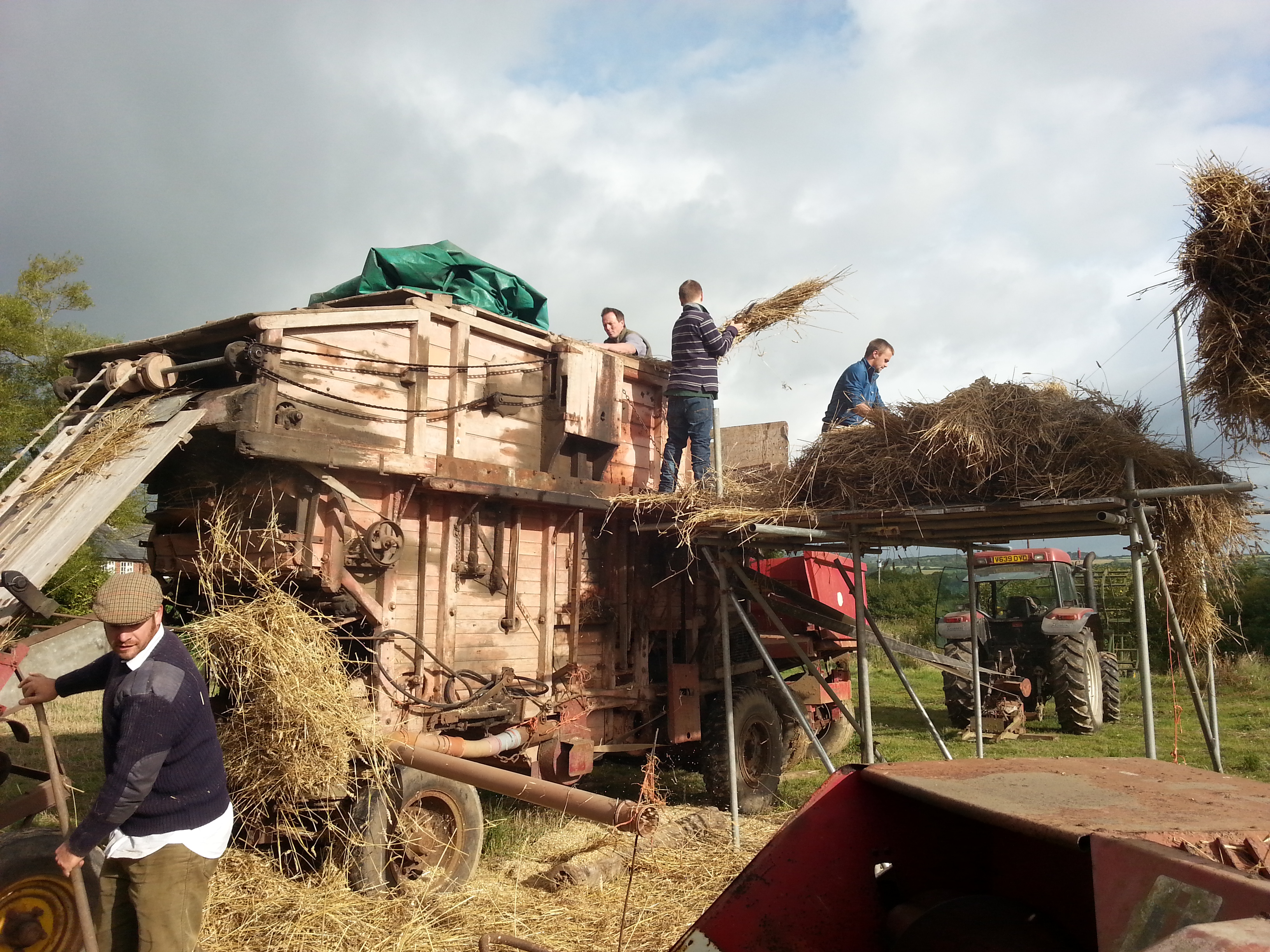
The straw is cut in mid-July then stoked for two weeks to dry, then hauled and stacked. The sheaves are left in the stack to condition before the reed comber threshes out the grain and removes the leaf and flag from the stems. The bundles are tied in the trusser and are now ready for the thatcher to put on a roof.
Thatching Tools
Here is a selection of my tools that I use on a regular basis.

The hooks going from left to right, starting with an eve’s knife then onto large shearing hooks, a small shearing hook and a left hand shearing hook. Various spar hooks (top right).
To the bottom left and right are the biddles with thatchers needles in the centre.